The fastest route to Uhuru Peak — Africa's highest summit at 5,895m. Two iconic routes, expert-certified guides, zero compromise on safety. Your five-day bucket-list adventure starts here.
Imagine standing at Uhuru Peak — 5,895 metres above sea level — with the African plains stretching endlessly below you, ancient glaciers at your back, and the golden light of summit sunrise painting your face. Now imagine reaching that moment in just five extraordinary days.
The 5 Days Kilimanjaro climbing tour is the fastest route to Africa's highest summit. Via the legendary Marangu Route (the "Coca-Cola Route," with dormitory hut accommodation) or the remote, starkly beautiful Rongai Route (approaching from the Kenyan border), a 5-day itinerary is designed for determined, physically prepared adventurers who refuse to let time stand between them and their greatest achievement.
No technical mountaineering skills required. No ropes, no crampons. Just your body, your will, and the mountain — guided every step of the way by our KINAPA-certified local experts who call this mountain home.
At Afro-Vertex Tours & Safaris, based right here in Moshi at the base of Kilimanjaro, we've guided hundreds of climbers from every corner of the world to Uhuru Peak. We know this mountain deeply — its moods, its trails, its rhythms — and we've designed our 5-day packages to give you the best possible chance of standing on top of Africa.
️ Important: 5-day Kilimanjaro climbs are the most demanding option due to rapid ascent. We strongly recommend them for physically fit hikers with prior high-altitude experience (3,000m+). For higher summit success, consider our 7-Day Kilimanjaro Tours.
A 5-day Kilimanjaro climb is not for everyone — and that's exactly what makes it extraordinary. Here's why serious adventurers choose the 5-day route.
For travelers with limited holiday time, a 5-day Kilimanjaro hiking tour delivers the full summit experience — rainforest, moorland, alpine desert, glacier, Uhuru Peak — in the tightest possible window. Five days. One summit. Africa's finest achievement.
Fewer days on the mountain mean fewer park fees, fewer meals, and lower total costs. A 5-day Kilimanjaro trekking tour offers the most affordable full-summit package — from just $1,250 per person — without cutting corners on safety or guiding quality.
Experienced hikers and endurance athletes often choose 5-day climbs precisely because of the challenge. The rapid ascent profile demands superior physical conditioning and mental toughness — and the summit feels that much sweeter for it.
Tropical rainforest → Heather and moorland → Alpine desert → Arctic summit zone. Kilimanjaro's five distinct climate zones unfold in rapid, breathtaking succession. Each morning brings a completely different world — a geographic miracle condensed into 5 days of guided Kilimanjaro trekking.
A 5-day Kilimanjaro tour fits beautifully into a 10–14 day Tanzania itinerary. Climb the mountain, then take a wildlife safari in the Serengeti or unwind on Zanzibar's white-sand beaches. Tanzania's ultimate triple experience, perfectly timed.
Reaching Uhuru Peak at 5,895m is an accomplishment that transcends words. Your summit certificate — stamped at the highest point in Africa — is proof of what human determination can achieve. Few experiences leave a mark this deep, this permanent, this magnificent.
Two meticulously designed 5-day summit packages — one iconic hut route, one remote wilderness trail. Both lead to the Roof of Africa.
 Most Popular 5-Day
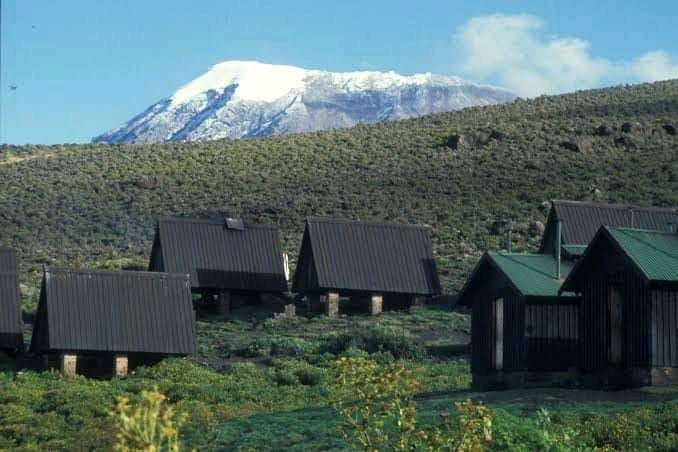
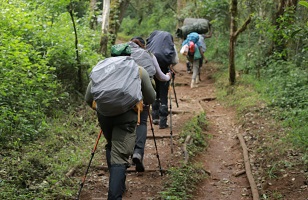
The classic "Coca-Cola Route" — Kilimanjaro's oldest and most-trodden trail, equipped with the only permanent dormitory huts on the mountain. Starting at Marangu Gate, you trek through ancient rainforest to Mandara Huts, climb to the open moorland of Horombo, push to the barren lunar landscape of Kibo, and make your summit bid before dawn. A legendary 5-day Kilimanjaro climbing journey with shelter built in.
Remote & Scenic
Kilimanjaro's only northern approach — entering from near the Kenyan border for an experience of wild solitude that the southern routes simply cannot match. Less crowded, drier weather, and sweeping panoramic views across the Amboseli plains toward Mount Kenya. This 5-day Kilimanjaro camping tour offers a genuinely remote wilderness feel from the first step to the final summit push — a true off-the-beaten-path adventure for independent-minded trekkers.
Accommodation style: The Marangu Route uses permanent dormitory huts throughout. The Rongai Route is fully tented camping. All meals (breakfast, lunch, dinner, snacks, hot drinks) are provided on both routes. See full price breakdown →
Understanding the differences between routes is essential. Each has a unique character, challenge profile, and summit success rate — find the one that's right for you.
The Marangu Route is Kilimanjaro's oldest, most established trail and the only route offering permanent dormitory hut accommodation — making it unique among all Kilimanjaro routes. Starting at the Marangu Gate on the southeastern slopes, the trail ascends gently through lush montane rainforest before opening out into vast heather moorland at Mandara Huts, then progresses through high alpine desert to Horombo and the eerie, lunar-like Kibo Huts.
On Day 4, trekkers depart Kibo Huts at midnight and push through the steep, rocky Kibo crater rim to Gilman's Point (5,681m), then along the crater rim to Uhuru Peak (5,895m) — arriving at the roof of Africa just as the African sun paints the sky. Descent follows the same route, with an overnight at Horombo before exiting through the forest to Marangu Gate on Day 5.
The Marangu Route is ideal for climbers who value shelter and structure, prefer a moderate gradient, or are newer to multi-day mountain trekking. It's also the best-value 5-day Kilimanjaro route.
The Rongai Route is Kilimanjaro's only trail approaching from the north — beginning near the Kenyan border village of Rongai and ascending through semi-arid savannah before entering pristine rainforest, then emerging onto vast open moorland with sweeping views toward Kenya's Amboseli National Park and Mount Kenya on clear days.
Quieter, drier, and less trafficked than the southern routes, the Rongai Route offers a more remote and introspective mountain experience. Wildlife sightings (including colobus monkeys and buffalo) are more frequent. On summit night, the approach follows the Marangu route from Kibo Huts. The descent is via the Marangu Route — meaning you experience two different sides of the mountain in one expedition.
This 5-day Kilimanjaro trekking tour is best suited for experienced hikers seeking solitude, photographers chasing the spectacular northern panoramas, and travelers departing from Nairobi who want to enter Kilimanjaro from the Kenyan side.
The Umbwe Route is Kilimanjaro's most direct and most challenging trail — a near-vertical ascent through dense rainforest on the southwestern flank that delivers trekkers to the Barranco Valley in record time. It's the least-used route on the mountain, offering extraordinary solitude and a raw, primal mountain experience.
Due to its extremely steep gradient and minimal acclimatization profile, the Umbwe Route is rarely done in 5 days. Most operators run it as a 6-day circuit, and our recommended version connects Umbwe's approach with the Lemosho or Southern Circuit descent for maximum acclimatization and scenery. However, fit and altitude-experienced trekkers may undertake a 5-day variation.
The Umbwe Route is for experienced mountaineers and seasoned trekkers only. If you're fit, have climbed above 4,000m before, and want the most challenging 5-day Kilimanjaro climbing experience possible, this is your route. Contact us to discuss a custom 5-day Umbwe itinerary.
| Factor | Marangu Route | Rongai Route | Umbwe Route |
|---|---|---|---|
| Duration | 5 Days | 5 Days | 5–6 Days |
| Difficulty | Moderate | Moderate–Hard | Very Hard |
| Accommodation | Dormitory Huts | Tented Camping | Tented Camping |
| 5-Day Success Rate | 50–65% | 55–70% | 45–60% |
| Scenery | Forest & Moorland | Northern Panoramas | Dramatic & Remote |
| Acclimatization | Minimal | Slightly Better | Very Fast (Risk) |
| Crowds | Moderate | Low | Very Low |
| Best For | First-timers, Comfort seekers | Experienced, Solo, Photography | Expert mountaineers only |
| Starting Gate | Marangu Gate (1,879m) | Rongai Gate (1,950m) | Umbwe Gate (1,640m) |
| From Price | $1,250/person | $1,350/person | Contact us |
Every day on Kilimanjaro tells a new story. Here's your full 5-day journey, step by detailed step.
Route: Marangu Gate → Mandara Huts → Horombo Huts → Kibo Huts → Uhuru Peak → Horombo Huts → Marangu Gate | Accommodation: Dormitory huts | Total distance: ~80km round trip
Your Kilimanjaro adventure begins with a morning briefing at our Moshi office, where you'll meet your guide team, check your gear, and receive your park permits. The drive to Marangu Gate takes approximately 45 minutes. After registration, the trail enters Kilimanjaro's magical montane rainforest — a cathedral of giant ferns, twisted fig trees, and orchids draped in mist. The forest is alive with birdsong, colobus monkeys, and the earthy fragrance of tropical soil. Emerge above the forest line at Mandara Huts, where wooden A-frame dormitory cabins nestle among the heather. Your first Kilimanjaro night awaits beneath an African sky full of stars. Meals: Lunch & Dinner. Overnight: Mandara Huts.
Leaving Mandara, the trail breaks free of the forest into the open moorland — a vast, wind-sculpted landscape of giant heather, everlasting flowers, and otherworldly giant lobelia plants that can only survive at altitude. On a clear day, Kenya's Amboseli plains shimmer in the distance. The path winds steadily upward through increasingly dramatic scenery as oxygen thins and the air sharpens. Horombo Huts sit at 3,720m — the highest sleeping point most will reach on a 6-day trip, but just your second night on this 5-day climb. Altitude may begin to make itself felt here. Drink water, walk slowly, breathe deeply. Meals: Breakfast, Lunch & Dinner. Overnight: Horombo Huts.
Today's trek crosses the Saddle — a high, barren expanse between Kilimanjaro's two primary peaks (Kibo and Mawenzi) that feels like the surface of the moon. The vegetation disappears entirely. The air is thin, the wind biting, and the scenery unlike anything on Earth. Mawenzi's jagged volcanic towers loom to the east as you cross this surreal high-altitude desert. Kibo Huts (4,700m) sit directly below the summit cone — a stone structure without heating, with a view straight up to Uhuru Peak. Eat well tonight. Rest by 7pm. The midnight alarm is coming. Meals: Breakfast, Lunch & Dinner. Overnight: Kibo Huts.
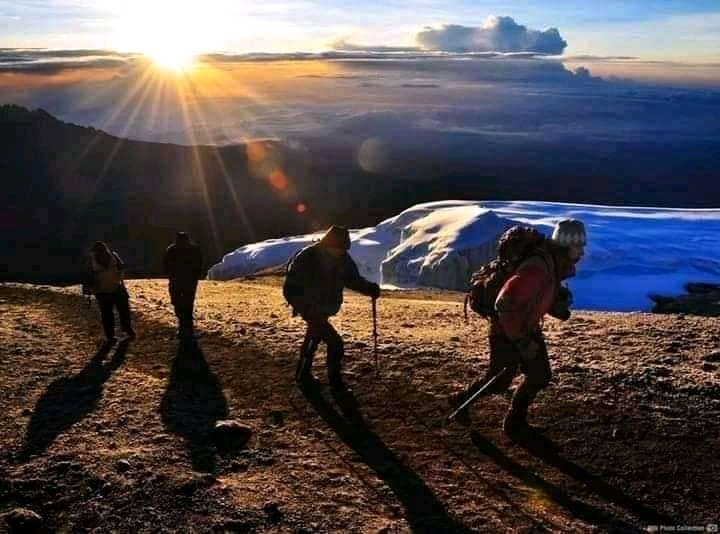
Midnight. Your guide wakes you. The temperature outside is below -10°C. Every layer you own is on your body. Under a canopy of equatorial stars, you begin the steepest, most demanding section of the entire 5-day Kilimanjaro climbing journey — a switchbacking, rocky ascent of the Kibo cone that tests every reserve of will and strength. At Gilman's Point (5,681m), the crater rim, the sun begins to rise. The sky transforms from deep indigo to violet, then crimson, then gold. Continuing along the crater rim through pristine alpine silence, you arrive at the Uhuru Peak sign at 5,895m — the highest point on the African continent. Tears are not uncommon. Neither is laughter. The world is very small and very beautiful from up here. After photos, celebration, and a moment of profound gratitude, the long descent begins — all the way down to Horombo Huts. Meals: Breakfast, Lunch & Dinner. Overnight: Horombo Huts.
The final morning is a celebration and a farewell. Descending through moorland back into the rainforest, legs aching and heart full, your guide team gathers at Marangu Gate for the official summit certificate ceremony — one of the most moving moments of the entire climb. The porters perform the traditional Kilimanjaro song. You sign the register. You receive your certificate. And then — tired, triumphant, and forever changed — you return to Moshi. Shower. Feast. Call home. You just climbed Africa. Meals: Breakfast & Lunch.
Route: Rongai Gate → First Cave → Third Cave → School Hut → Uhuru Peak → Horombo Huts → Marangu Gate | Accommodation: Tented camping | Total distance: ~73km
After a 2.5-hour drive from Moshi to the remote Rongai Gate near the Kenyan border, your 5-day Kilimanjaro trekking tour begins in an almost otherworldly silence. The northern approach is immediately distinctive — semi-arid scrub gives way to pristine, less-visited montane forest, and the absence of other climbers creates a genuinely wilderness atmosphere. Wildlife sightings of colobus monkeys, buffalo, and exotic birds are common. First Cave Camp, set among moorland heather with sweeping views toward Kenya, is your first taste of Rongai's magnificent isolation. Meals: Lunch & Dinner. Overnight: Tented camp.
The trail climbs through open moorland past Second Cave, with panoramic views of Kenya's Amboseli and Tsavo regions unfolding behind you. Mount Kenya is visible on exceptionally clear days. The northern sky is vast and uninterrupted — this is Kilimanjaro at its most solitary and magnificent. Third Cave Camp sits on an exposed ridge above the heather zone, with the great dome of Kibo's summit cone filling the southern horizon. The altitude climbs significantly today — pace yourself, drink plenty of water, and heed your guide's rhythm. Meals: Breakfast, Lunch & Dinner. Overnight: Tented camp.
A shorter day by distance but demanding by altitude — the air is noticeably thinner now and every step requires conscious intention. The landscape has turned lunar: no vegetation, no soil, just volcanic rock and the immense sky. School Hut (4,750m) is your high-altitude base camp, set on the northeastern flank of the Kibo cone with a clear sightline to the summit glaciers above. Dinner is served early. Lights out by 7pm. The summit push begins at midnight. Meals: Breakfast, Lunch & Dinner. Overnight: Tented camp.
Midnight. Headlamps flicker to life. The temperature is punishing. You join the final ascent — a relentless, zigzagging climb up loose volcanic scree, every breath deliberate, every step counted. The stars of the equatorial sky are your ceiling. At Gilman's Point (5,681m) the crater rim greets you with the first blush of sunrise — an experience so profoundly beautiful that climbers routinely describe it as life-changing. The walk along the rim to Uhuru Peak (5,895m) takes a further 45–60 minutes — but by now you are walking on pure will. The sign. The glaciers. Africa spread out below you in every direction. This is why you came. Descend via the Marangu Route to Horombo Huts for a hard-earned rest. Meals: Breakfast, Lunch & Dinner. Overnight: Horombo Huts.
The final descent through Kilimanjaro's magnificent rainforest feels like re-entering the world — warm, fragrant, alive. At Marangu Gate, the summit certificate ceremony marks the triumphant conclusion of your 5-day Kilimanjaro hiking tour. The porters sing. The guide team cheers. You sign your name in the register of those who reached the Roof of Africa. Transfer back to Moshi follows — tired, proud, and permanently transformed. Meals: Breakfast & Lunch.
Transparent, all-inclusive pricing for every budget level — group and private, camping and huts, budget to luxury. No hidden fees. No surprises.
| Package | Route | Style | Accommodation | Price/Person | Book |
|---|---|---|---|---|---|
| Camping Packages — Group Basis | |||||
| 5-Day Rongai + Budget Hotel | Rongai | Camping + Budget | Budget hotel (pre & post) | $1,350 | Book |
| 5-Day Rongai + Mid-range Hotel | Rongai | Camping + Mid-range | 3 hotel (pre & post) | $1,550 | Book |
| 5-Day Rongai + Luxury Hotel | Rongai | Camping + Luxury | 4–5 hotel (pre & post) | $1,850 | Book |
| Marangu Huts Packages — Group Basis | |||||
| 5-Day Marangu Huts + Budget Hotel | Marangu | Huts + Budget | Budget hotel (pre & post) | $1,250 | Book |
| 5-Day Marangu Huts + Mid-range Hotel | Marangu | Huts + Mid-range | 3 hotel (pre & post) | $1,450 | Book |
| 5-Day Marangu Huts + Luxury Hotel | Marangu | Huts + Luxury | 4–5 hotel (pre & post) | $1,750 | Book |
| Package | Route | Style | Accommodation | Price/Person | Book |
|---|---|---|---|---|---|
| Camping Packages — Private Basis | |||||
| 5-Day Rongai Private + Budget Hotel | Rongai | Private Camping + Budget | Budget hotel (pre & post) | $1,550 | Book |
| 5-Day Rongai Private + Mid-range Hotel | Rongai | Private Camping + Mid-range | 3 hotel (pre & post) | $1,750 | Book |
| 5-Day Rongai Private + Luxury Hotel | Rongai | Private Camping + Luxury | 4–5 hotel (pre & post) | $2,050 | Book |
| Marangu Huts Packages — Private Basis | |||||
| 5-Day Marangu Private + Budget Hotel | Marangu | Private Huts + Budget | Budget hotel (pre & post) | $1,450 | Book |
| 5-Day Marangu Private + Mid-range Hotel | Marangu | Private Huts + Mid-range | 3 hotel (pre & post) | $1,650 | Book |
| 5-Day Marangu Private + Luxury Hotel | Marangu | Private Huts + Luxury | 4–5 hotel (pre & post) | $1,950 | Book |
We arrange seamless pickups and transfers from every major departure point in Tanzania, Kenya, Uganda, Rwanda, and beyond. Your 5-day Kilimanjaro adventure begins from wherever you are.
The most convenient starting points — Moshi is just 45 minutes from Marangu Gate. Our office is based right here in Moshi. Morning pickup from your hotel included in all packages. Arusha transfers (2.5 hrs) also available at no extra charge for groups.
Landing at Kilimanjaro Airport? We meet you at arrivals, handle your transfer to Moshi, brief you on the climb, and get you rested before Day 1. Arrive the evening before your start date for a smooth, unhurried departure.
Fly from Julius Nyerere International Airport (DAR) to Kilimanjaro Airport in 1 hour, or take the overnight express bus. We recommend flying for comfort and convenience — flights are affordable and frequent. We arrange your full onward logistics.
After your Zanzibar beach holiday, add Kilimanjaro for the ultimate Tanzania combo. Fly directly from Zanzibar Airport (ZNZ) to Kilimanjaro Airport — a scenic 1-hour hop over the Indian Ocean and Tanzania's northeastern highlands.
From Mwanza on the shores of Lake Victoria, fly or take the overnight train to Kilimanjaro. Our team coordinates all connections and meets you on arrival for a seamless transition from lake country to Africa's highest peak.
Combine a Ngorongoro Crater safari with Kilimanjaro for the perfect Tanzania two-in-one. We arrange comfortable overland transfers from Karatu or Mto wa Mbu — approximately 4–5 hours through the scenic Rift Valley escarpment to Moshi.
Nairobi is just 5–6 hours by road from Moshi via the Namanga border crossing, or 1 hour by air to Kilimanjaro Airport. The Rongai Route departs even closer to the Kenyan border — ideal for travelers based in Nairobi. We handle all border and transfer logistics.
Combine a Kenyan beach holiday with a Kilimanjaro summit climb — one of East Africa's most popular travel combinations. Fly or drive from Mombasa's coastal resorts to Kilimanjaro in 3–5 hours, then summit Africa, then return to the beach. Epic doesn't cover it.
From Entebbe International Airport, fly directly to Kilimanjaro Airport — typically with a short stopover in Nairobi. Uganda's growing adventure traveler community is discovering Kilimanjaro as the perfect complement to gorilla trekking. We coordinate your full journey.
Rwanda's adventurous travelers — returning from gorilla trekking in Volcanoes National Park — frequently extend their East African adventure with a Kilimanjaro climb. Fly from Kigali via Nairobi to Kilimanjaro Airport in under 3 hours total travel time.
Departing from elsewhere in the world? No problem. Our team can arrange airport meet-and-greet services at Kilimanjaro Airport (JRO) and coordinate all logistics from your point of arrival. Contact us to plan your journey →
Kilimanjaro can be climbed year-round, but timing your 5-day climb correctly makes a significant difference to your summit experience, trail conditions, and success rate.
The first dry window offers clear skies, firm trails, and excellent summit visibility. January and February are among the least crowded months of the year — ideal if you want a 5-day climb without the peak-season masses. March stays relatively dry before the long rains arrive in April. Temperatures are warmer on the lower slopes, making for a more comfortable trek.
The main climbing season — and for good reason. June through October brings the clearest skies, driest trails, and highest summit success rates of the year. July, August, and September are the busiest months. Expect more climbers on the popular Marangu Route, but also the most reliable weather window. The Rongai Route remains comparatively uncrowded even in peak season.
️ Wet season caution (April–May & November): The long rains (April–May) and short rains (November) bring heavy precipitation, slippery trails, and reduced summit visibility. Climbing is possible but success rates drop and the experience is harder. If your only available dates fall in these months, the Rongai Route's drier northern approach is a better choice. Contact us for current conditions.
Two accommodation styles — permanent huts or tented camps — and three hotel tiers before and after your climb. Every option is designed for your comfort, safety, and summit success.
The Marangu Route is unique among all Kilimanjaro routes — the only trail with permanent dormitory-style sleeping huts throughout. Mandara Huts (2,720m), Horombo Huts (3,720m), and Kibo Huts (4,700m) provide wooden bunk beds with mattresses and basic cooking facilities. There is no heating — but the huts shelter you completely from the mountain's wind and cold, making the Marangu Route a significantly warmer sleeping experience than camping alternatives.
Huts sleep 4–6 climbers per room in bunk style. Private rooms can sometimes be arranged. Shared dining halls serve our chef-prepared meals. Toilets are shared. Huts are heated by body warmth — sleeping bags rated to -10°C are still essential.
Our Rongai Route 5-day camping experience uses high-quality, double-walled expedition tents designed for extreme altitude conditions. Each tent accommodates two climbers comfortably. Sleeping mats are provided — bring your own -10°C to -15°C rated sleeping bag (or rent one from us in Moshi). A separate cook tent serves all meals, and our mountain chef prepares surprisingly excellent food at altitude — from hot breakfast porridge to three-course evening dinners. Portable toilet tents are available on request.
Camping at altitude is colder and more exposed than huts — but many climbers find the stars from a tent on Kilimanjaro to be one of the most transcendent experiences of their lives.
Clean, comfortable guesthouses and budget hotels in Moshi town — ideal for travelers focused on the climb experience rather than hotel luxury. Most budget hotels include breakfast, Wi-Fi, and secure luggage storage. Popular with backpackers and solo travelers. Approximate cost: $30–60/night per room.
3-star hotels and boutique guesthouses in and around Moshi — the most popular choice for independent travelers and small groups. Comfortable rooms, garden settings, swimming pools, excellent local restaurants, and personalized service at the base of Kilimanjaro. Approximate cost: $80–150/night per room.
4 and 5-star properties including the legendary Arusha Coffee Lodge, Onsea House, and Weru Weru River Lodge — world-class properties with Kilimanjaro views, spa facilities, gourmet dining, and the highest standards of African hospitality. The perfect way to rest and recover before and after your summit challenge. Approximate cost: $200–450+/night per room.
Altitude sickness is the primary reason climbers don't reach Uhuru Peak — especially on faster 5-day itineraries. Knowledge is your most important piece of gear.
Acute Mountain Sickness (AMS) occurs when the body ascends faster than it can adapt to reduced oxygen levels. Above 2,500m, symptoms can include headache, nausea, fatigue, dizziness, and loss of appetite. On a 5-day Kilimanjaro climb, the rapid ascent makes AMS more likely than on longer routes. Mild AMS is normal — severe AMS requires immediate descent.
Drink 3–4 litres of water per day on the mountain. Dehydration at altitude accelerates AMS symptoms dramatically. Avoid alcohol in the days before and during your climb. Our guides monitor your hydration throughout the trek and will remind you constantly — embrace the mantra: Drink before you're thirsty.
Pole pole (Swahili for "slowly slowly") is the golden rule of Kilimanjaro. Every experienced guide will repeat it constantly. The urge to hike fast is natural — but speed is the enemy of acclimatization. Our certified guides set a deliberate, sustainable pace calibrated for your body's altitude response.
Acetazolamide (Diamox) is a prescription medication proven to help prevent AMS by stimulating faster breathing. Many doctors recommend it for 5-day Kilimanjaro climbers specifically. Consult your physician well before your climb. Common side effects include increased urination and tingling in the fingers — both manageable.
Our guides carry pulse oximeters and check your blood oxygen saturation levels twice daily — at camp after dinner and in the morning before departure. This provides objective, real-time data on how your body is acclimatizing. Blood oxygen below 80% at rest is a serious warning sign that we act on immediately.
Our guides have the authority — and the absolute obligation — to require descent if a climber shows signs of severe AMS, HACE (High Altitude Cerebral Edema), or HAPE (High Altitude Pulmonary Edema). No summit is worth a life. Descent is always the correct treatment for severe altitude illness, and our guides are trained to make that call with confidence.
️ Physical Preparation for a 5-Day Kilimanjaro Climb: Begin cardiovascular training (hiking, running, cycling) at least 8–12 weeks before your climb. Practice hiking with a 6–8kg daypack. Prior experience at altitude above 3,000m is strongly recommended for 5-day itineraries. If you have any pre-existing cardiac, respiratory, or blood disorders, consult your doctor before booking.
Proper gear is non-negotiable on Kilimanjaro. This is Africa's highest peak — summit temperatures can reach -20°C. Be prepared. Be comfortable. Be successful.
Gear rental available in Moshi: Our Moshi office can arrange rental of sleeping bags, trekking poles, gaiters, and cold-weather gloves for climbers who don't own or can't transport the full kit. Contact us when booking. Porter bags are capped at 15kg per KINAPA regulations — all excess baggage is stored securely at our Moshi office.
Kilimanjaro is not just a summit — it's a journey through five distinct worlds, each more extraordinary than the last.
Ancient, cathedral-like forest draped in mist and moss. Black-and-white colobus monkeys swing overhead. Buffalo crash through the undergrowth. Over 170 species of birds include the rare Kilimanjaro White-eye. The air smells of rain and damp earth. Every footstep on the forest floor is cushioned by decades of leaf litter. This is Africa's most magical forest — and your gateway to the mountain.
Emerging from the forest, the landscape opens dramatically. Giant heather trees — draped in old man's beard lichen — stand 4 metres tall. Everlasting flowers (Helichrysum) dot the hillsides in yellow and white. The giant lobelia — one of nature's most extraordinary plants — grows nowhere else on Earth in quite this way. Moorland sunsets paint the mountain gold.
Vegetation gives way entirely to bare volcanic rock, dust, and scree. The landscape feels like the surface of Mars — vast, ochre, utterly silent except for the wind. Mawenzi's jagged spires pierce the sky. The Saddle stretches between the two peaks in an eerie, hypnotic emptiness. This is where the mountain's true character reveals itself — raw, ancient, overwhelming in scale.
The final zone — temperatures below -20°C on summit night, permanent glaciers and ice fields stretching from Uhuru Peak across the crater rim. The Furtwängler Glacier, though retreating rapidly, is still breathtaking up close. The summit view — African plains in every direction, the curvature of the Earth visible, the sky impossibly blue — is one of the most spectacular on the planet. There is nothing else like it.
It begins in the dark. Midnight. Sub-zero temperatures. A column of headlamps snaking upward through the volcanic scree of Kibo's summit cone. Every step is deliberate. Every breath counted. The mountain is silent except for the wind and the soft crunch of boots on rock.
At Stella Point (5,739m), the first grey light of dawn appears on the eastern horizon. The relief is indescribable. At Gilman's Point (5,681m), the crater rim, the sun begins to rise — and what follows is one of the most beautiful sights any human can witness: the African sunrise seen from 5,681 metres, the shadow of Kilimanjaro itself stretching across the clouds below.
The walk along the crater rim to Uhuru Peak (5,895m) — the highest point on the African continent — takes a further 45–60 minutes. The glaciers are on your right. The crater drops away to your left. The sky is the deepest, purest blue you have ever seen.
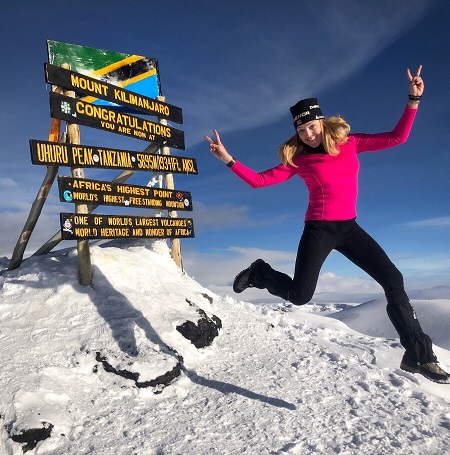
And then: the sign. The wooden board that reads CONGRATULATIONS — You are now at Uhuru Peak, Tanzania, 5895M AMSL — Africa's Highest Point — World's Highest Free-Standing Mountain. Your guide shakes your hand. Your eyes fill with tears. Everything you went through to be here — every early morning training run, every moment of doubt, every cold camp, every aching step — was worth it. More than worth it.
This is not just a summit. This is a transformation. And it happens in just five extraordinary days.
Every climber who reaches Uhuru Peak receives an official KINAPA summit certificate — hand-signed at the park gate. It's the most meaningful piece of paper you'll ever own.
Join a scheduled group departure and share the Kilimanjaro experience with fellow adventurers from around the world. Small groups (max 12), big adventures, and a camaraderie forged at altitude.
| Departure Date | Return Date | Route | Duration | Style | From | Spaces | Book |
|---|---|---|---|---|---|---|---|
| Jun 29, 2026 - 2027 | Jul 03, 2026 - 2027 | Marangu | 5 Days | Huts | $1,350 | Available | Book |
| Jul 12, 2026 - 2027 | Jul 16, 2026 - 2027 | Marangu | 5 Days | Huts | $1,350 | Available | Book |
| Jul 20, 2026 - 2027 | Jul 24, 2026 - 2027 | Rongai | 5 Days | Camping | $1,450 | Available | Book |
| Aug 05, 2026 - 2027 | Aug 09, 2026 - 2027 | Marangu | 5 Days | Huts | $1,350 | Filling Fast | Book |
| Aug 15, 2026 - 2027 | Aug 19, 2026 - 2027 | Rongai | 5 Days | Camping | $1,450 | Available | Book |
| Sep 06, 2026 - 2027 | Sep 10, 2026 - 2027 | Marangu | 5 Days | Huts | $1,350 | Available | Book |
| Oct 04, 2026 - 2027 | Oct 08, 2026 - 2027 | Rongai | 5 Days | Camping | $1,450 | Available | Book |
| Dec 20, 2026 - 2027 | Dec 24, 2026 - 2027 | Marangu | 5 Days | Huts | $1,500 | Available | Book |
Don't see your preferred dates? We can arrange a private 5-day Kilimanjaro departure on any date of the year — just contact us with your desired start date and group size. View all group departure dates →
Kilimanjaro draws bucket-list adventurers from across the globe. Here's what the 5-day climb means for travelers from the world's major mountain tourism markets.
American adventurers — from New York executives to Colorado outdoor enthusiasts — make up one of the largest groups on Kilimanjaro. US citizens typically fly into Kilimanjaro Airport via Amsterdam, Doha, Dubai, or Addis Ababa. No visa on arrival for US travelers — an e-visa is required in advance. The 5-day Kilimanjaro climb fits perfectly into a 10–12 day Tanzania itinerary combined with Serengeti safari.
British climbers are among Kilimanjaro's most frequent visitors — a direct legacy of East Africa's British colonial history and the UK's deep love of outdoor adventure. Fly direct from London Heathrow or Gatwick to Kilimanjaro via KLM, Qatar, or Ethiopian Airlines. British citizens can obtain a Tanzanian e-visa online. Moshi's many British-owned guesthouses make UK travelers feel instantly at home.
German-speaking adventurers rank among the most frequent European visitors to Kilimanjaro. The mountain's epic scale appeals deeply to the Alpine trekking culture of Germany, Austria, and Switzerland. Direct connections from Frankfurt, Munich, or Zurich via Lufthansa or Swiss/Ethiopian Airlines. German travelers tend to prefer the longer 7–8 day routes, but time-pressed professionals increasingly choose the efficient 5-day option.
French adventurers — with a strong tradition of mountain exploration — are drawn to Kilimanjaro as a non-technical high-altitude challenge. Fly from Paris CDG via Air France/Ethiopian Airlines. Belgian and Swiss French travelers connect from Brussels and Geneva. The Marangu Route's hut accommodation appeals to travelers seeking comfort; the Rongai Route's wilderness experience attracts the true explorers.
Antipodean adventurers increasingly choose Kilimanjaro as a logical East African adventure stop on long-haul round-the-world itineraries. Perth, Sydney, and Auckland connect via Singapore, Dubai, or Doha to Kilimanjaro Airport. The 5-day climb slots beautifully into longer African journeys combining Tanzania, Kenya, and Uganda or Rwanda gorilla trekking.
Canadian climbers — particularly from outdoor-oriented cities like Vancouver, Calgary, and Ottawa — arrive via Toronto's Pearson Airport or Vancouver International, connecting through Amsterdam or Doha. Canadians bring a particularly well-prepared, outdoor-experienced approach to Kilimanjaro and tend to have above-average summit success rates. Tanzania issues e-visas online for Canadian passport holders.
KLM's direct Amsterdam–Kilimanjaro route makes the Netherlands one of the most conveniently connected European source markets for Kilimanjaro. Dutch and Belgian travelers are among the most frequent visitors and tend to be highly experienced independent travelers. Dutch-speaking guides are available on request with advance notice.
India's rapidly growing adventure tourism market is discovering Kilimanjaro — particularly among corporate groups, NRI communities, and Himalayan trekkers seeking a new challenge. Indian travelers fly via Ethiopian Airlines, Kenya Airways, or Emirates from Mumbai, Delhi, or Bangalore to Kilimanjaro Airport. Tanzania's scenic wild landscapes and the warm Swahili culture resonate deeply with Indian visitors.
Singapore Airlines' connections through Johannesburg and the growing East African tourism market are bringing more Southeast Asian adventure travelers to Kilimanjaro each year. Well-traveled Singaporeans, Malaysians, and Thais appreciate the mountain's technical accessibility — no ropes, no mountaineering skills — and the incredible East African wildlife experience that surrounds it.
Tanzania e-Visa: Most nationalities can apply for a Tanzania e-visa online at visa.immigration.go.tz. Single-entry tourist visas cost $50 USD. East African Tourist Visas (covering Tanzania, Kenya, and Uganda) are available for $100. Tanzanian residents from neighboring countries do not require a visa. Contact us for country-specific visa guidance.
The mountain doesn't belong to us — we belong to it. Our commitment to responsible mountain tourism is woven into every aspect of how we operate.
We operate in full alignment with the Kilimanjaro Porters Assistance Project (KPAP) guidelines — ensuring our porters receive fair wages, proper equipment, regulated carry weights (max 20kg), and respectful treatment throughout every climb.
All waste generated during your climb — food packaging, personal waste, toilet paper — is carried off the mountain by our porters. We leave no trace. Our camps are left cleaner than we found them. The mountain's ecosystems depend on this commitment.
100% of our mountain crew — guides, assistant guides, cooks, and porters — are hired from local Chagga and Kilimanjaro communities. Your climb supports dozens of families in Moshi and the villages surrounding the mountain.
A portion of every booking contributes to local conservation initiatives and Kilimanjaro National Park development programs. KINAPA park fees also fund the park's anti-poaching units, trail maintenance, and glacier monitoring research.
Our guides brief all climbers on the mountain crew tipping culture before the climb. We provide a tipping guide to ensure porters and guides receive the recognition and income they deserve for the physically demanding, skilled work they perform.
Kilimanjaro's glaciers have retreated dramatically in the last century — a visible, daily reminder of global climate change. We educate all our climbers about this reality and encourage responsible carbon offsetting for long-haul flights to Tanzania.
We are Kilimanjaro. Born in Moshi. Certified by KINAPA. Trusted by climbers from over 50 countries. Here's why the world's most discerning adventurers choose us.
No overseas middlemen. No inflated commissions. We operate from Moshi — the mountain town at Kilimanjaro's foot — giving you the most direct, authentic, and cost-efficient access to Africa's greatest mountain.
Every one of our mountain guides holds full KINAPA (Kilimanjaro National Park Authority) certification — Tanzania's highest professional mountain guiding qualification. Your guide is not just a route leader; they're your safety officer, altitude expert, and cultural ambassador.
Our summit success rate across all packages consistently exceeds the industry average. Our guides' expert pacing, altitude monitoring, acclimatization coaching, and route knowledge give you the best possible chance of standing on Uhuru Peak.
What you see is what you pay. Our prices include all park fees, guide and porter wages, all mountain meals, safety equipment, and the summit certificate. Zero hidden fees. Zero surprises at the gate. We believe in complete pricing honesty.
We carry pulse oximeters on every climb, conduct twice-daily health assessments, carry oxygen and emergency medications, and operate strict descent-when-needed policies. Safety is never negotiated on our mountain expeditions.
From 1-day hikes to 10-day Northern Circuit expeditions, across all 7 official routes, in group and private format at budget, mid-range, and luxury levels — we have the perfect Kilimanjaro package for every traveler and every budget.
Our porters are the heart of every Kilimanjaro expedition. We comply fully with KPAP guidelines — fair pay, safe carry weights, proper clothing and equipment, and respectful team culture. When you climb with us, you're also lifting up local families.
Hundreds of verified reviews from climbers in over 50 countries consistently praise our guides' expertise, the quality of mountain food, our responsiveness, and the overall professionalism of our operation. Our reputation is our greatest asset — and we protect it on every climb.
Real reviews from real adventurers who reached the Roof of Africa with Afro-Vertex Tours & Safaris.
"An unforgettable experience from start to finish. Our guide Hamisi was exceptional — incredibly knowledgeable about altitude management and kept our spirits high through the hardest stretches of the summit night. We made it to Uhuru Peak just as the sun rose. I cried like a child and I'm not ashamed. Afro-Vertex made this happen."
"We did the 5-day Rongai route as a couple and it was absolutely perfect. The northern approach is spectacular — so quiet, so wild. The food on the mountain was genuinely excellent (our cook outdid himself every evening!). The team is professional, warm, and deeply passionate about their mountain. We're already planning our return for a 7-day Lemosho."
"I came to Tanzania for a safari and added the 5-day Kilimanjaro climb at the last minute. The Afro-Vertex team was incredibly accommodating — organized everything in 3 days. My guide John was brilliant and patient with my pace on the summit night. I reached Uhuru Peak. This is now the proudest achievement of my life."
"Outstanding local operator. The entire logistics — Nairobi pickup, border crossing, gear check in Moshi, mountain food, porter service — were seamless. The guides monitor your health with a pulse oximeter twice a day which gave us real peace of mind. Booked the 5-day Marangu for my father (67) and myself — both summited!"
"I've climbed Mont Blanc and Aconcagua, and this team matched or exceeded the professionalism I experienced with operators in Europe and South America. The Rongai route in 5 days is seriously challenging but deeply rewarding. Afro-Vertex's pricing is extremely fair for what you receive. Do not book overseas — book local."
"As a solo female traveler from Australia, I joined the group departure for the 5-day Marangu route and felt completely safe and supported throughout. The other climbers became friends. Our guide Emmanuel was superb — motivating, funny, and sharp as a tack when it came to reading the mountain's conditions. Will recommend Afro-Vertex to everyone."
Answers to the questions travelers ask most about 5-day Kilimanjaro climbing tours.
Yes — absolutely. The Marangu Route (5 days, hut accommodation) and the Rongai Route (5 days, camping) are both established summit climbs that take climbers to Uhuru Peak (5,895m) in just five days. However, a 5-day Kilimanjaro climb is more demanding than longer options due to the faster ascent profile and limited acclimatization time. We recommend 5-day itineraries for physically fit hikers with prior experience hiking above 3,000m.
Our 5-day Kilimanjaro tours start from $1,250 per person (5-Day Marangu Route, group basis) and $1,350 per person (5-Day Rongai Route, group basis). Private basis packages start from $1,450. All prices include KINAPA park fees, certified guides and licensed porters, all meals on the mountain, safety equipment, and a summit certificate. Pre and post-climb hotel accommodation is available as an add-on at budget, mid-range, and luxury levels.
The overall summit success rate for 5-day Kilimanjaro climbs is approximately 50–65% across the industry. This compares to 85–95%+ for 7-day and 8-day climbs with better acclimatization profiles. Our guides' expertise and strict health monitoring push our own success rate above the industry average. Factors that most influence success: physical fitness, prior altitude experience, pace (pole pole!), hydration, and listening to your guide.
We recommend 5-day climbs primarily for hikers with prior high-altitude experience (ideally above 3,000–4,000m). For first-time mountain climbers, our 6-day or 7-day Kilimanjaro tours provide significantly better acclimatization and higher summit success rates. That said, a very fit beginner who has trained specifically for the climb and has no pre-existing health conditions can successfully complete a 5-day Kilimanjaro tour — particularly on the Marangu Route with hut accommodation.
The Marangu Route (the "Coca-Cola Route") ascends and descends the same southeastern trail and uses permanent dormitory hut accommodation throughout. It's the most popular, most accessible, and most budget-friendly 5-day option. The Rongai Route approaches from the north (Kenyan border), uses tented camping, is significantly less crowded, and offers sweeping northern panoramas toward Kenya and Amboseli. Both routes converge near the summit and summit via the same Gilman's Point/Uhuru Peak trail.
Essential items include: waterproof outer shell jacket and trousers, insulated summit jacket, moisture-wicking base layers, warm hat and balaclava, insulated summit gloves, waterproof trekking boots (well broken-in), trekking poles, a sleeping bag rated to -15°C (or rent from us), headlamp, sunscreen SPF50+, UV-protection sunglasses, 3+ litres water capacity, high-energy snacks, a first aid kit with blister treatment, and any prescription medications (Diamox for altitude sickness, on doctor's advice). See our full packing list above for the complete breakdown.
Most nationalities require a Tanzania tourist visa, which can be obtained online as an e-visa at visa.immigration.go.tz before travel. Single-entry tourist visas cost $50 USD. Citizens of some African nations (including Tanzania's East African Community partners) may enter visa-free. East African Tourist Visas (covering Tanzania, Kenya, and Uganda) are available for $100 and are popular with travelers doing multi-country East African itineraries. Always verify the current visa requirements for your passport before booking.
Consult your travel medicine doctor or clinic at least 6–8 weeks before departure. Standard recommended vaccinations for Tanzania include: Yellow Fever (required if arriving from a yellow fever-endemic country), Typhoid, Hepatitis A & B, Rabies (if extended wildlife exposure), Tetanus-Diphtheria-Pertussis, and Meningococcal. Anti-malarial medication is recommended for Moshi and lowland Tanzania (Kilimanjaro's high altitudes are malaria-free). All recommendations depend on your health history and the duration of your visit.
We recommend booking at least 4–8 weeks before your preferred start date. Peak season months (July, August, September) and holiday periods (Christmas/New Year) should ideally be booked 3–6 months in advance as group departures fill quickly. Private departures can sometimes be arranged with as little as 1–2 weeks notice outside of peak season. Contact us as early as possible to secure your preferred dates and best available accommodation.
No — tips for the mountain crew (guides, assistant guides, cook, porters) are not included in the package price and are entirely separate. Tipping is culturally important and forms a significant part of the mountain crew's income. We provide a tipping guideline at your pre-climb briefing. Recommended total tips for a 5-day Marangu group climb: approximately $150–200 USD per climber for the full team. We recommend bringing tip money in small USD bills.
