Everything about 6-day Kilimanjaro climbing tours — all 6 available routes, full day-by-day itineraries, success rates, costs, departure dates, packing, and booking. The most popular Kilimanjaro duration that balances time, cost, and summit success.
The 6-day Kilimanjaro tour is the most widely recommended duration that offers a genuine balance between summit success, cost, and time commitment. Six routes are available at this duration — from the budget-friendly Marangu to the scenic Lemosho and the challenging Umbwe — each offering a completely different experience to Africa's highest peak.
A 6-day Kilimanjaro tour provides significantly better acclimatization than the 5-day option while remaining 1–3 days shorter than the premium 7–9 day expeditions. For climbers with one week available, the 6-day format is frequently the optimal choice — providing 82–87% summit success rates depending on route, full access to every ecological zone, and complete immersion in the Kilimanjaro experience from tropical rainforest to arctic summit.
Six routes operate 6-day itineraries in 2026 - 2027: Marangu (huts, most affordable), Machame (most popular, camping), Lemosho (best scenery, camping), Rongai (northern approach, camping), Umbwe (experienced climbers, camping), and Londorosi (remote western approach, camping). Each route covers Kilimanjaro's five distinct ecological zones — rainforest, moorland, alpine desert, sub-nival, and arctic summit — before reaching Uhuru Peak at 5,895m.
All 6-day Afro-Vertex tours are fully all-inclusive: KINAPA park fees, certified guides, licensed porters, all meals, accommodation, and Moshi transfers. Group departures run weekly throughout the year with a minimum of one departure every week across all major routes. Private expeditions available on any date.
Yes — 6 days is a completely viable and widely-chosen duration for a successful Kilimanjaro summit attempt. With success rates of 82–87% across routes, 6-day tours deliver strong summit probabilities for fit, well-prepared climbers. The key advantages over 5-day tours:
The honest comparison: 7-day tours achieve 90%+ success rates on the same routes. If your schedule can extend by even one additional day, the 7-day option will meaningfully improve your summit probability. But if 6 days is genuinely what your calendar allows, it is an excellent and well-proven duration for Kilimanjaro.
Kilimanjaro duration is the most important decision after choosing your route. Here is the honest comparison of every duration option to help you make the right call.
Shortest summit option. Very limited acclimatization. Only suitable for experienced high-altitude trekkers.
50–65% SuccessStrong balance of time and success. One acclimatization day. Most popular for climbers with 1 week available.
82–87% SuccessBest standard duration. Two acclimatization opportunities. Significant improvement in summit probability.
90%+ SuccessPremium duration. 92%+ success on Lemosho. Extra day provides outstanding acclimatization profile.
92%+ SuccessNorthern Circuit. 360° traverse. Highest success rate available. For those who want the full mountain experience.
95% SuccessSix completely different Kilimanjaro routes operate 6-day itineraries. Same summit, same mountain — entirely different journeys. Choose based on your priorities: scenery, success rate, budget, crowd level, or challenge.
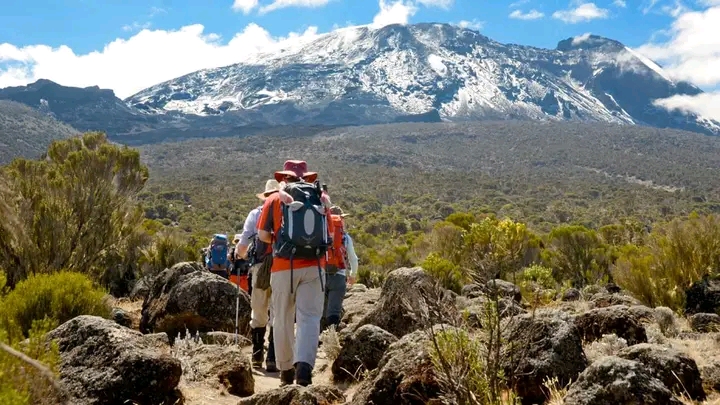 Most Affordable
82% Success
Most Affordable
82% Success
The only Kilimanjaro route with permanent hut accommodation — beds, communal dining, no camping. The 6-day version includes a critical acclimatization day at Horombo Huts (3,720m), improving success dramatically over the 5-day option. Best choice for climbers who prefer comfort over camping, or are on the tightest budget.
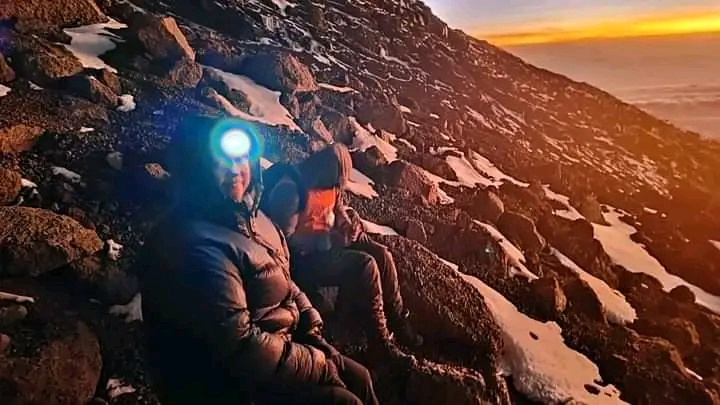 Most Popular
85–87% Success
Most Popular
85–87% Success
The world's most popular Kilimanjaro route, now in 6 days. The iconic Barranco Wall scramble, Lava Tower acclimatization, and extraordinarily diverse scenery. The 6-day Machame compresses the 7-day itinerary by removing the Karanga Camp stop — slightly more demanding daily profiles but very achievable for fit trekkers.
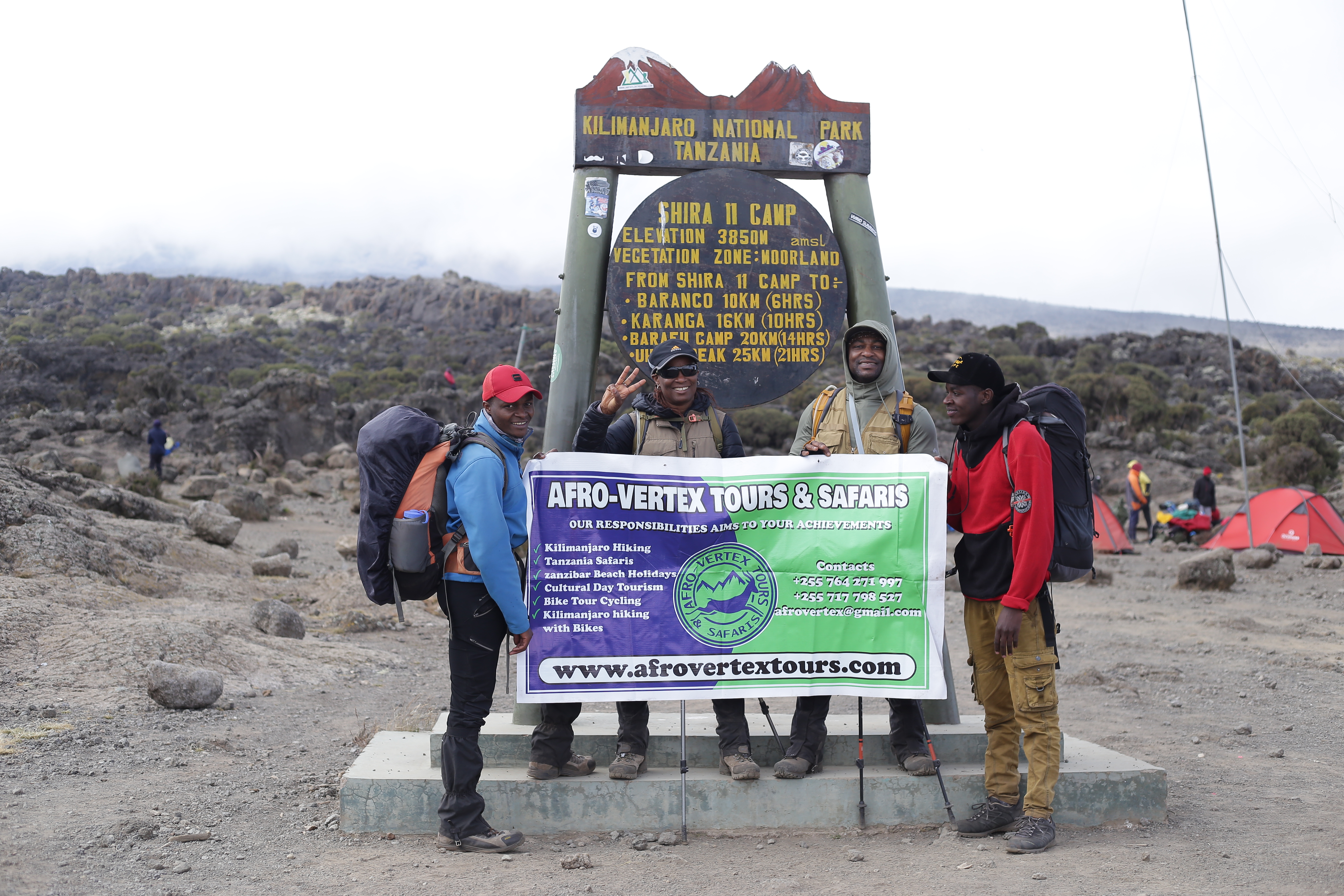 Best Scenery
87%+ Success
Best Scenery
87%+ Success
Kilimanjaro's most beautiful route in 6 days. Enters via the remote Lemosho Gate through pristine forest, crosses the full Shira Plateau, tackles the Barranco Wall, and ascends to the summit. At 6 days, the Lemosho itinerary is fast-paced but the route's superior western approach still delivers better acclimatization than Machame at the same duration.
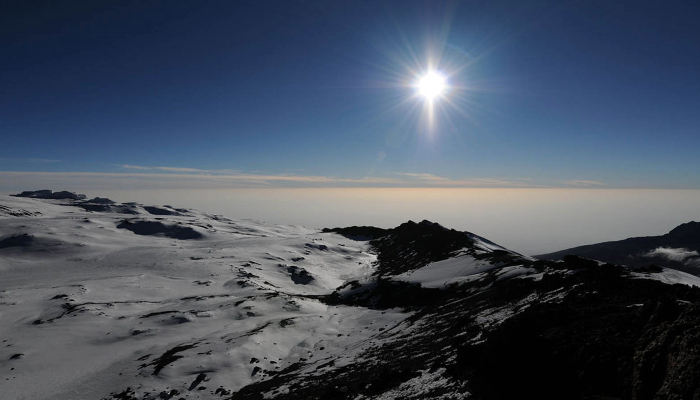 Best Wet Season
82–85% Success
Best Wet Season
82–85% Success
The only northern approach from the Kenya border. The driest route on Kilimanjaro — making it the definitive choice for April–May wet season climbing. Wildlife near the gate, Kenya/Amboseli panoramic views, and near-total solitude. Descends via the Marangu route, giving you the unique experience of ascending and descending on different paths.
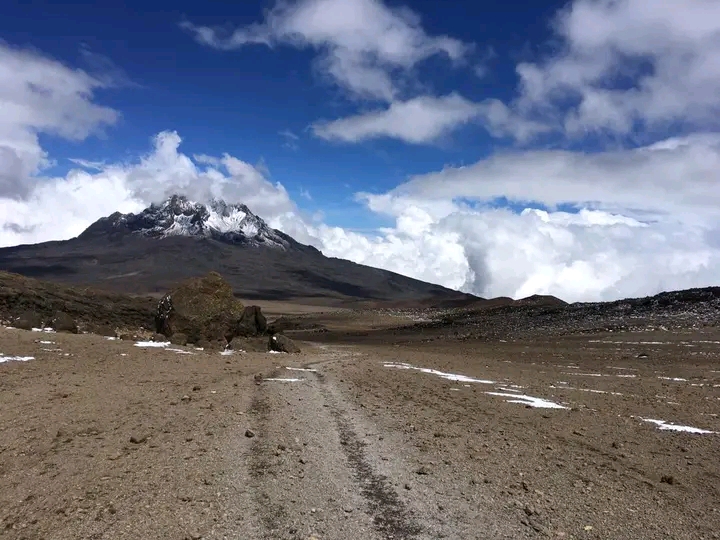 Expert Only
72% Success
Expert Only
72% Success
Kilimanjaro's most direct and demanding route. Steep ridge forest from day one, rapid altitude gain, and the lowest overall success rate on a 6-day schedule. Not for first-timers — requires proven high-altitude experience above 4,000m. Rewards the skilled climber with near-total solitude and the raw, unfiltered challenge of Kilimanjaro at its most physically demanding.
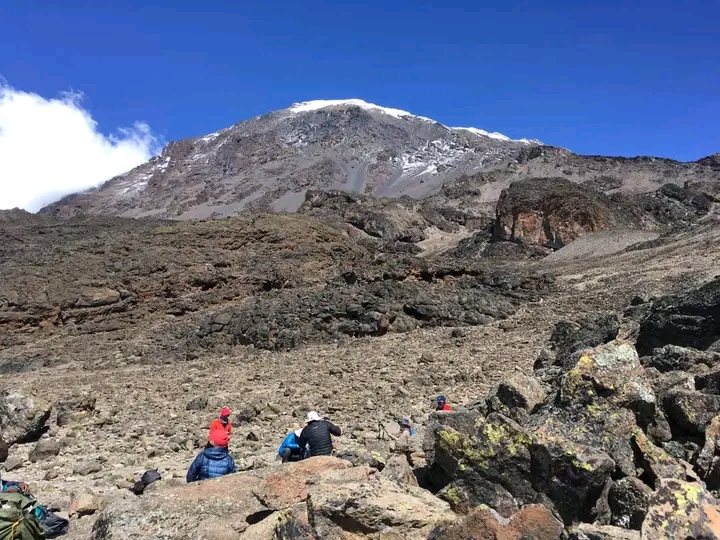 Most Remote
87%+ Success
Most Remote
87%+ Success
The Londorosi Route is a Lemosho variant entering via the more remote Londorosi Gate on the far western slopes — accessing even more pristine wilderness and maximum wildlife potential before joining the Shira Plateau. Identical to Lemosho from Shira 1 onwards. The most secluded 6-day western approach available, with the highest probability of elephant and buffalo sightings near the gate.
The recommended 6-day Marangu itinerary includes an acclimatization day at Horombo Huts (3,720m) on Day 3 — the critical difference over the 5-day version that raises success rates from 50–65% to 82%+.
Depart Moshi after breakfast and transfer to Marangu Gate (1,860m) for park registration. The trail enters the dense montane rainforest immediately — colobus monkeys, sunbirds, and endemic flora throughout. Arrive at Mandara Huts (2,720m) in 3–4 hours. Afternoon optional side trip to Maundi Crater rim viewpoint (30 min). Dinner and briefing in the communal dining hall.
The longest day — climb from the forest through heathland into the moorland zone. Giant groundsels and lobelias appear, found nowhere else on earth. Views of Mawenzi Peak (5,149m) and the Kibo summit cone open dramatically. Arrive at Horombo Huts (3,720m) — spectacularly positioned with views across Tanzania. First altitude effects may appear; inform your guide of all symptoms.
The most strategically important day on the 6-day Marangu Route. Spending an extra night at 3,720m gives your body the acclimatization time that separates 82% success from 50% success. Morning hike to Zebra Rocks (~3,995m) — distinctive striped volcanic formations — follows the "climb high, sleep low" principle. Afternoon rest, hydration, and health monitoring. Full dinner and early sleep before the Kibo approach tomorrow.
Cross the vast alpine desert "Saddle" between Mawenzi and Kibo — one of Africa's most otherworldly landscapes. Almost no vegetation. Volcanic ash and rock underfoot. The Kibo cone dominates the horizon ahead. Arrive at Kibo Huts (4,703m) in early afternoon. Eat, drink, and rest immediately — midnight wake-up call in 6–7 hours. Altitude effects are strong here; every symptom reported to your guide.
Midnight start (00:00). In darkness and cold (−10°C to −20°C), the group ascends the loose volcanic scree slope to Gillman's Point (5,685m) on the crater rim — 5–7 hours of steady, deliberate movement. Pole pole. From Gillman's, continue 45–60 minutes along the crater rim to Uhuru Peak (5,895m) — the highest point in Africa. After photographs and the summit certificate moment, full descent to Horombo Huts the same day.
Final descent through moorland and rainforest to Marangu Gate. Porter team sings traditional Swahili celebration songs. Official KINAPA summit certificate issued at the gate. Transfer to Moshi for post-climb dinner and accommodation.
The 6-day Machame itinerary covers the same key highlights as the 7-day — Barranco Wall, Lava Tower acclimatization, Barafu summit push — but at a slightly more intensive daily pace. Barranco and Karanga camps are combined into one long day.
Transfer to Machame Gate (1,800m) after breakfast. The trail ascends immediately through dense montane rainforest — one of the most biologically rich ecosystems on the mountain. Porters overtake the group at impressive speed. A long day gaining 1,220m through the forest to Machame Camp (3,020m) at the moorland boundary.
Shorter day ascending through heather and moorland to the Shira Plateau. The landscape opens dramatically — giant groundsels and lobelias dominate. Shira Camp (3,840m) sits at the western edge of the plateau with first close views of the Kibo summit. Afternoon rest is important — altitude effects often begin around this elevation.
The critical acclimatization day. Route climbs to Lava Tower (4,630m) for lunch — a dramatic volcanic rock formation at the base of the Western Breach — before descending to Barranco Camp (3,976m). This "climb high, sleep low" technique is the primary reason for Machame's strong 6-day success rate. The Southern Ice Fields become clearly visible from Lava Tower.
The longest and most demanding non-summit day on the 6-day Machame. Begin with the Barranco Wall — a 257-metre volcanic rock scramble requiring hands and feet (no ropes). Views from the top are extraordinary. Continue across the Karanga Valley to Karanga Camp for lunch, then push on to Barafu (4,673m) — the summit basecamp. This is a notably harder day than the 7-day equivalent which splits this section. Arrive Barafu, rest, eat, and sleep immediately.
Midnight departure (00:00). The ascent to Stella Point (5,756m) on the crater rim takes 5–7 hours through darkness, cold, and thin air. Stella Point at dawn — the sunrise across Africa from the crater rim is one of the world's great natural experiences. Continue 45 minutes along the crater rim to Uhuru Peak (5,895m). Full descent to Mweka Camp (3,068m) the same day.
Final rainforest descent to Mweka Gate. Crew celebration songs. KINAPA summit certificate issued. Transfer back to Moshi. Post-climb dinner and rest.
The 6-day Lemosho covers the full Shira Plateau crossing and Barranco Wall experience with its remote western forest approach — at a faster pace than the 7–8 day versions.
| Day | Stage | Start | End | Distance | Duration |
|---|---|---|---|---|---|
| Day 1 | Lemosho Gate → Big Tree Camp (Mti Mkubwa) | 2,100m | 2,750m | 7km | 3–4 hrs |
| Day 2 | Big Tree Camp → Shira 2 Camp (Shira Plateau crossing) | 2,750m | 3,840m | 15km | 7–8 hrs |
| Day 3 | Shira 2 → Lava Tower (4,630m) → Barranco Camp | 3,840m | 3,976m | 14km | 6–8 hrs |
| Day 4 | Barranco Wall → Karanga Valley → Barafu Camp | 3,976m | 4,673m | 10km | 7–9 hrs |
| Day 5 | Barafu → Stella Point → Uhuru Peak → Mweka Camp | 4,673m | 5,895m → 3,068m | 16km | 12–16 hrs |
| Day 6 | Mweka Camp → Mweka Gate | 3,068m | 1,640m | 10km | 3–4 hrs |
The 6-day Rongai ascends from the north via the Kenya border — the driest approach on the entire mountain. Ideal for April–May wet season when southern routes become slippery and difficult.
| Day | Stage | Start | End | Distance | Duration |
|---|---|---|---|---|---|
| Day 1 | Rongai Gate → Simba Camp | 1,950m | 2,625m | 8km | 3–4 hrs |
| Day 2 | Simba Camp → Third Cave Camp | 2,625m | 3,800m | 9km | 5–6 hrs |
| Day 3 | Third Cave Camp → Mawenzi Tarn Camp (Acclimatization hike) | 3,800m | 4,330m | 4km | 3–4 hrs + return |
| Day 4 | Third Cave → School Hut (Kibo North) | 3,800m | 4,750m | 8km | 4–5 hrs |
| Day 5 | School Hut → Uhuru Peak → Horombo Huts | 4,750m | 5,895m → 3,720m | 18km | 12–15 hrs |
| Day 6 | Horombo Huts → Marangu Gate | 3,720m | 1,860m | 20km | 5–6 hrs |
For experienced mountaineers (Umbwe) and adventurers seeking the most remote western approach (Londorosi).
| Day | Stage | Elevation |
|---|---|---|
| D1 | Umbwe Gate → Cave Camp | 1,640m → 2,940m |
| D2 | Cave Camp → Barranco Camp | 2,940m → 3,976m |
| D3 | Acclimatization at Barranco Camp | 3,976m (rest) |
| D4 | Barranco Wall → Barafu Camp | 3,976m → 4,673m |
| D5 | Barafu → Uhuru Peak → Mweka Camp | 4,673m → 5,895m → 3,068m |
| D6 | Mweka Camp → Mweka Gate | 3,068m → 1,640m |
| Day | Stage | Elevation |
|---|---|---|
| D1 | Londorosi Gate → Shira 1 Camp | 2,100m → 3,500m |
| D2 | Shira 1 → Shira 2 Camp (joins Lemosho) | 3,500m → 3,840m |
| D3 | Shira 2 → Lava Tower → Barranco Camp | 3,840m → 3,976m |
| D4 | Barranco Wall → Barafu Camp | 3,976m → 4,673m |
| D5 | Barafu → Uhuru Peak → Mweka Camp | 4,673m → 5,895m → 3,068m |
| D6 | Mweka Camp → Mweka Gate | 3,068m → 1,640m |
All-inclusive prices for every 6-day Kilimanjaro tour. KINAPA park fees, hut or camping accommodation, certified guides, licensed porters, all meals, and Moshi transfers — fully included. Zero hidden costs.
All prices per person in USD. Group = joining departures. Luxury = private tour with premium lodge. All KINAPA park fees, accommodation, certified guides, porters, all meals included.
Group joining departures run every week throughout 2026 - 2027 on all major routes. Guaranteed to depart regardless of group size. Private expeditions available on any date with 2 weeks notice.
| Month | Season | Best Routes | Trail Conditions | Crowds |
|---|---|---|---|---|
| January–February | Secondary Dry | All routes | Excellent | Low–Moderate |
| March | Shoulder | All routes | Good | Moderate |
| April–May | Long Rains | Rongai, Marangu | Wet / Slippery | Very Low |
| June–October | Main Dry | All routes | Best of year | High (Jul–Aug) |
| November | Short Rains | Rongai, Marangu | Wet | Low |
| December | Festive | All routes | Good | Moderate |
Summit success rates for all 6-day Kilimanjaro routes — based on Afro-Vertex expedition data with KINAPA-certified guides and twice-daily health monitoring protocols.
The 6-day success rates listed above represent Afro-Vertex averages with properly trained guides using health monitoring. Actual success depends on several factors within your control:
The best time for your 6-day Kilimanjaro tour depends on your priorities. Here is the full seasonal guide for every month of the year.
The secondary dry season — clear skies, firm trails, excellent summit visibility, and 30–40% fewer climbers than peak season. January and February are our top recommendation for value-season 6-day tours. March sees the start of a rainfall increase but remains excellent for all routes.
The main dry season. The best weather of the year. July and August are the busiest months — great social atmosphere in camp with climbers from 20+ countries. September and October offer peak-quality conditions with significantly reduced crowds. Book 3–4 months ahead for July–August.
November brings short rains — wetter trails but still viable, especially on Rongai and Marangu. December conditions improve progressively through the month toward Christmas, making late December an excellent festive season option for 6-day tours on all routes.
Long rains. Very wet, slippery southern-route trails. If your only dates fall April–May, the 6-day Rongai Route is strongly recommended — its dry northern approach makes it the most practical 6-day wet-season option. Marangu (huts) also viable.
The 6-day Kilimanjaro tour demands genuine cardiovascular fitness and mental resilience. Start training 3–4 months before your departure date using this guide.
Regular cardiovascular exercise 4–5 days per week. Running, cycling, swimming, or rowing all work. Build to 45–60 minutes of sustained moderate-intensity cardio. Cardiovascular endurance matters far more than raw strength on Kilimanjaro.
The most specific preparation for Kilimanjaro. Build to 15–20km day hikes carrying a loaded 6–8kg pack every weekend. Include significant elevation gain. This trains the specific muscle groups and cardiovascular demands of the actual climb better than any gym session.
Stair climbing, inclined treadmill, or stadium stairs 2–3 times per week. The Kilimanjaro ascent is essentially 4,000m of continuous uphill walking — your legs need to be strong and efficient at prolonged incline work. Focus on quadriceps, glutes, and calves.
The 6-day descent sections — particularly summit day and final day — are long and steep. Eccentric quadriceps exercises (step-downs, slow squats) protect your knees. Weak quads on descent cause the most common non-altitude injuries on Kilimanjaro.
Wear your climbing boots on all training hikes for at least 6–8 weeks before departure. Blister prevention begins during training, not on the mountain. Boots that are not broken in cause genuine incapacitation on summit day — do not arrive with new boots.
Visit your doctor 6–8 weeks before your climb. Discuss cardiovascular health, Diamox (Acetazolamide) for altitude prevention, and any medications you take. Request specific altitude sickness prevention advice for high-altitude trekking above 4,500m.
If possible, arrive in Tanzania 2–3 days before your climb begins. Spending time at Moshi (900m) acclimatizes your body to East African altitude and allows you to sort any logistics. A pre-climb acclimatization hike on Mount Meru (4,566m) is an excellent option.
The 6-day summit night is Kilimanjaro's greatest challenge — cold, darkness, thin air, exhaustion. Mentally rehearse pushing through significant discomfort. Your guide has done this hundreds of times. Trust them completely. Summit success is 60% physical and 40% mental.
Temperature range: +25°C at the gate to −20°C at the summit. Every layer matters. This is the complete packing list our Moshi guide team recommends for all 6-day routes.
The most searched questions about 6-day Kilimanjaro tours — answered directly by the Afro-Vertex guide team in Moshi.
Six routes. Every week. All-inclusive from $1,500. KINAPA-certified guides, 82–87% success rates, group and private options. Our Moshi team confirms bookings within hours.
